
Olive Oils & Balsamic
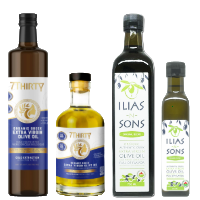

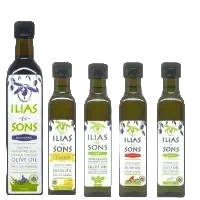

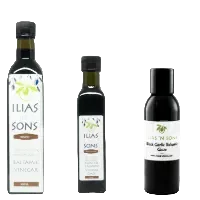

- Black Garlic Infused Extra Virgin Olive Oil - Low Fodmap
- Garlic Infused Extra Virgin Olive Oil
- Pizza Oil Cayenne Pepper Infused Extra Virgin Olive Oil
- Smoked Infused Extra Virgin Olive Oil
- Basil Infused Extra Virgin Olive Oil
- Rosemary Infused Extra Virgin Olive Oil
- Lemon Infused Extra Virgin Olive Oil
- Orange Infused Extra Virgin Olive Oil
- Black Truffle Extra Virgin Olive Oil
Why Organic High Phenolic Extra Virgin Olive Oil Matters More Than Ever

Why Organic High Phenolic Olive Oil Matters More Than Ever
Walk down any grocery aisle today and you’ll see the word “organic” everywhere. In many cases, consumers are paying more without really understanding what they’re getting. But when it comes to extra virgin olive oil, especially high phenolic olive oil, the conversation becomes much more important.
Not all olive oils are created equal.
At Ilias and Sons, we’ve spent years working directly with Greek olive oil producers, learning how cultivation methods, harvest timing, fertilizer use, storage conditions, and processing techniques all influence the final product. The deeper we got into the olive oil world, the more we realized that freshness and transparency matter just as much as certifications. But when you can combine both high quality production and organic standards, it creates something truly special.
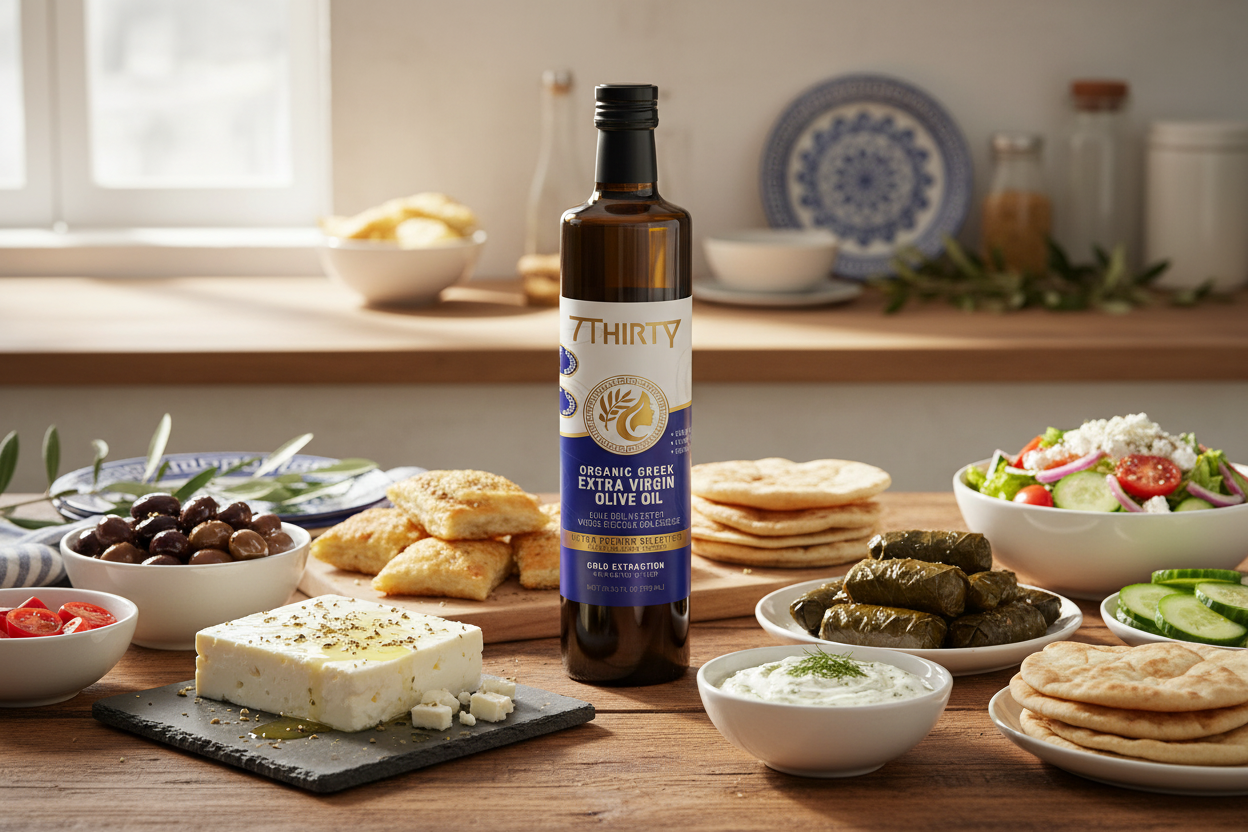
That’s exactly why products like our 7Thirty High Phenolic Greek Extra Virgin Olive Oil exist.
The Problem with Modern Agriculture
Modern agriculture has become heavily dependent on synthetic fertilizers, pesticides, herbicides, and aggressive farming techniques designed to maximize yield. While this approach may increase production volume, it can also create unintended consequences for soil quality, biodiversity, and ultimately the food we consume daily.
Olive trees are naturally resilient. Historically, many Greek olive groves operated with minimal intervention, relying on healthy soil ecosystems, seasonal rainfall, and traditional farming methods passed down for generations. But as global demand for olive oil increased, industrial farming practices began entering the industry.
Today, some large scale olive operations rely heavily on chemical fertilizers to accelerate growth and increase output. If improperly managed, excessive fertilizer use can alter soil composition, damage microbial life, and increase dependency on synthetic agricultural inputs over time.
The same concern applies to pesticides and herbicides.
While many regulated agricultural chemicals fall within legal limits, consumers are increasingly asking an important question:
If olive oil is something I consume every day, what kind of long term exposure am I comfortable with?
That’s a fair question.
Why Organic Matters in Olive Oil
Organic certification is not perfect, and it does not automatically guarantee superior olive oil. There are excellent producers who choose not to certify due to cost, bureaucracy, or small scale production methods. At the same time, there are mediocre organic olive oils that simply meet minimum certification requirements.
But dismissing organic olive oil entirely as “just marketing” oversimplifies the issue.
Organic olive oil production generally restricts or prohibits:
-
Synthetic herbicides
-
Many synthetic pesticides
-
Certain chemical fertilizers
-
Genetically modified agricultural inputs
-
Various processing additives
In the European Union, organic olive oil certification often extends beyond farming practices alone. The farming, milling, storage, transportation, and bottling processes may all require separate compliance and traceability standards.
For consumers who use extra virgin olive oil daily, reducing cumulative exposure to unnecessary agricultural chemicals is a reasonable and practical approach.
Especially when olive oil is not just a condiment, but a staple food consumed year after year.
The Rise of High Phenolic Olive Oil
In recent years, another category has started gaining attention among health conscious consumers: high phenolic extra virgin olive oil.
Phenolic compounds are naturally occurring antioxidants found in fresh early harvest olive oil. Two of the most discussed compounds are oleocanthal and hydroxytyrosol.
These compounds are largely responsible for:
-
The peppery sensation in the throat
-
The bitterness often found in robust oils
-
The intense grassy flavour profile of fresh harvest EVOO
Ironically, many people mistake these characteristics as flaws when they are actually indicators of freshness and polyphenol content.
Mass market olive oils are often intentionally mild because they are designed for broad consumer appeal. High phenolic olive oils are different. They are intentionally harvested earlier, when olives are greener and richer in natural polyphenols.
The trade off is lower yield but higher quality.
Why 7Thirty Was Created
At Ilias and Sons, we created 7Thirty for customers specifically seeking a high phenolic Greek extra virgin olive oil with bold flavour and strong character.
This is not meant to be a neutral cooking oil.
7Thirty is an early harvest EVOO produced from carefully selected olives in Greece and bottled to preserve freshness and polyphenol integrity. The intense green colour, bitterness, and throat burn are all natural characteristics of a fresh high phenolic olive oil.
Many of our customers use it:
-
As a finishing oil
-
Over salads and vegetables
-
With sourdough bread
-
Over eggs cooked low and slow
-
Or simply by the spoonful as part of their daily routine
Some customers even take a small shot in the morning and evening.
If you’re new to high phenolic EVOO, adding a little fresh lemon can soften the intensity while still allowing you to enjoy the flavour profile.
Clear Glass vs Dark Glass
One of the more interesting conversations we’ve had with customers involves packaging.
We originally launched 7Thirty in a clear glass bottle because we sold heavily through farmers markets, events, and direct consumer channels. Customers loved seeing the vibrant green colour of the oil, which visually reinforced its freshness and early harvest nature.
Because these bottles moved quickly and were not sitting for extended periods on retail shelves under fluorescent lighting or direct sunlight, we were comfortable with the approach.
However, as awareness around oxidation and UV exposure increased, many customers requested darker UV protected packaging.
We listened.
Today, 7Thirty is also available in dark UV protected glass, and demand for that version has grown significantly among customers focused on long term freshness protection.
Regardless of packaging, we always recommend storing olive oil:
-
In a cool dark location
-
Away from direct sunlight
-
Away from heat sources like stoves or ovens
Proper storage matters.
Not All Olive Oils Serve the Same Purpose
One mistake consumers often make is assuming every olive oil should taste mild and smooth.
That’s simply not true.
Different olive oils are designed for different uses.
High phenolic early harvest oils like 7Thirty are intentionally robust and intense. Other oils harvested later in the season may be smoother, softer, and more versatile for everyday cooking or sipping.
At Ilias and Sons, we often explain this using a simple analogy:
A bold red wine and a smooth white wine can both be excellent. They simply serve different purposes.
The same applies to olive oil.
The Mediterranean Perspective
Growing up in Mediterranean culture, olive oil was never treated as a luxury product or trend. It was simply food. Real food.
It went on everything:
-
Eggs
-
Bread
-
Salads
-
Vegetables
-
Fish
-
Soups
And importantly, it was consumed consistently.
The Mediterranean diet has become globally recognized not because of one magic ingredient, but because of long term dietary patterns rooted in simplicity, balance, and minimally processed foods.
Extra virgin olive oil sits at the centre of that lifestyle.
Final Thoughts
Organic certification alone should not be the only factor when choosing olive oil. But it absolutely plays an important role in understanding how the olives were grown, processed, and handled throughout the supply chain.
When you combine:
-
Organic cultivation
-
Early harvest timing
-
High polyphenol content
-
Transparent sourcing
-
Proper storage
-
Freshness
-
Responsible packaging
you create something fundamentally different from the average supermarket olive oil.
That is the philosophy behind 7Thirty.
Not mass production. Not marketing gimmicks. Just carefully produced Greek extra virgin olive oil designed for people who genuinely care about quality, flavour, and what they consume every day.
Explore 7Thirty High Phenolic Greek Extra Virgin Olive Oil:
https://iliasandsons.com/products/7thirty-high-phenolic-ultra-premium
Leave a comment
Comments will be approved before showing up.