
Olive Oils & Balsamic
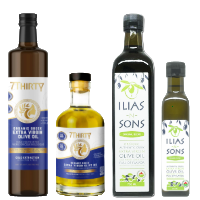

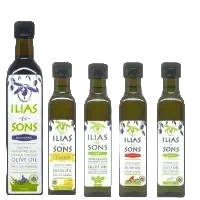

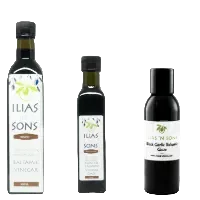

- Black Garlic Infused Extra Virgin Olive Oil - Low Fodmap
- Garlic Infused Extra Virgin Olive Oil
- Pizza Oil Cayenne Pepper Infused Extra Virgin Olive Oil
- Smoked Infused Extra Virgin Olive Oil
- Basil Infused Extra Virgin Olive Oil
- Rosemary Infused Extra Virgin Olive Oil
- Lemon Infused Extra Virgin Olive Oil
- Orange Infused Extra Virgin Olive Oil
- Black Truffle Extra Virgin Olive Oil
Understanding Olive Oil Polyphenols: Breaking Down the Compounds Behind the Numbers in Greek Extra Virgin Olive Oil
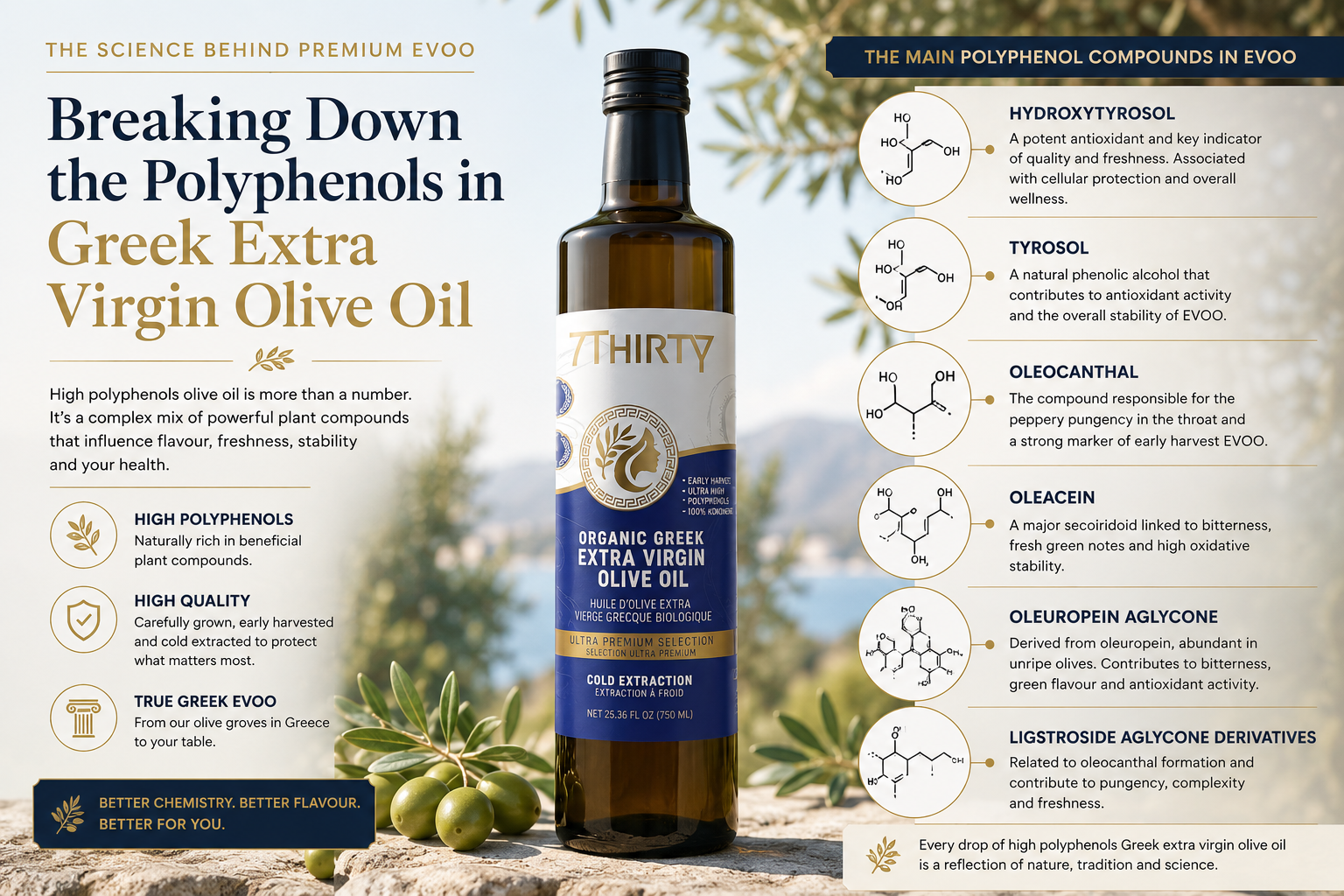

When shoppers see a bottle of Greek extra virgin olive oil labelled “high polyphenol,” they usually notice one number. Finding high-quality Polyphenol Olive Oil involves looking beyond a single total. This number represents several distinct phenolic compounds. Each compound behaves differently and affects flavour in its own way. Every chemical profile also has its own body of research behind it. This article explains the key compounds in a professional EVOO lab analysis.
If you buy or want to understand premium Greek extra virgin olive oil, this guide is the place to start.
What are polyphenols in extra virgin olive oil?
Polyphenols are natural bioactive compounds found in olives. Their levels depend on factors such as olive variety and harvest timing. Climate and farming practices also play a major role. Processing methods and storage conditions further influence the final concentration levels.
In quality EVOO, these compounds create bitter and pungent sensations. People associate these peppery notes with fresh, premium oil. They are a major reason Greek extra virgin olive oil is studied so often. Researchers link these oils to long-term health and wellness.
On a lab report, total polyphenols are usually listed in mg/kg. That total represents a diverse collection of many individual compounds.
The main compounds in Polyphenol Olive Oil
1) Hydroxytyrosol and Hydrothyrosol
Hydroxytyrosol is one of the most potent antioxidants found in Greek EVOO. It is widely studied for protecting against oxidative stress. It is often linked with oxidative protection and cellular defence. This compound serves as a key indicator of freshness in the oil.
In some scientific contexts and older texts, Hydrothyrosol is mentioned alongside these antioxidant profiles. Premium early-harvest EVOO typically shows higher levels of these molecules. Under EU rules, oils with enough of this compound qualify for health claims.
2) Tyrosol
Tyrosol is another phenolic alcohol found in quality EVOO. It is typically less powerful than its counterpart, hydroxytyrosol. However, it still supports the oil’s overall phenolic profile. It contributes significantly to the long-term stability of the olive oil.
This compound and its derivatives are commonly included in total calculations. They are essential for EU health-claim assessments and HPLC lab reporting.
3) Oleocanthal
Oleocanthal is a well-known compound in premium Greek EVOO. It is the primary reason why fresh olive oil can feel “spicy.” It is strongly associated with the peppery burn in the throat. Some people experience a minor cough reaction from this intensity.
Generally, more of this compound creates a sharper, more peppery oil. Lower levels result in a much smoother profile. This is why real Polyphenol Olive Oil tastes more intense than refined oils. The sensation is a sign of high-quality chemical complexity.
4) Oleacein
Oleacein is another key compound found in high-quality EVOO. It is commonly linked with fresh and green flavour notes. It contributes to the bitterness and oxidative stability of the oil. It is a hallmark of early-harvest character in Greek varieties.
This compound and oleocanthal are often discussed together. Both play a major role in the flavour profile of healthy oils. Different Greek olive varieties produce various balances between them. This creates the unique taste profiles found across regional Greek oils.
5) Oleuropein Aglycone
Oleuropein is abundant in olive leaves and unripe olives. During extraction, related forms appear in the final extra virgin olive oil. Oleuropein Aglycone strongly influences the level of bitterness. It also helps define the green flavour profiles of the oil.
Early-harvest Greek EVOO often shows higher levels of this specific compound. The intensity of an oil often correlates with these secoiridoid levels. They are vital for consumers seeking the most robust oils.
What makes up the “total polyphenol” number?
A professional lab analysis adds multiple phenolic groups together. A simplified version of the calculation includes several factors. Total polyphenols equal hydroxytyrosol derivatives, tyrosol derivatives, secoiridoids, and lignans. Minor phenolics also count toward the final sum.
Two bottles can both test at 700 mg/kg but taste different. One might be oleocanthal-forward with more noticeable throat heat. Another might lean toward oleacein for more green bitterness. A third may offer a balanced mix of all these compounds.
One headline number does not tell the story. The specific breakdown determines the character of your selection.
Why the testing method matters
Not all tests measure polyphenols in the same way. Advanced lab methods identify and measure individual compounds accurately. These include HPLC, HPLC-DAD, and NMR testing methods. IOC-recognized HPLC methods are among the most trusted for analysis.
With the right testing, you can see a full phenolic breakdown. This includes total polyphenols, oleocanthal, oleacein, and specific derivatives. Without reliable methods, high-concentration claims are harder to confirm. Transparency in testing is vital for this category of Greek oils.
Why early-harvest Greek EVOO usually tests higher
Early-harvest olives are greener and less ripe than late fruit. They are more concentrated in these beneficial phenolic compounds. As olives ripen, the oil yield per fruit increases. However, the polyphenol levels often drop during this process.
Flavours also become softer and much less intense over time. This is why premium Greek oils typically cost more. It delivers less oil per kilogram but higher quality. Choosing high-polyphenol options means choosing quality over yield.
Final thoughts
Polyphenols shape the oil's profile. They influence flavour, freshness, stability, and bitterness. Proper selection depends on these details. Understanding these compounds helps you choose the best Greek EVOO. High-quality Polyphenol Olive Oil is defined by chemical diversity. Seek products with transparent testing. Identifying authentic extra virgin oils improves your culinary experience. Our guide helps you find the right balance for your Polyphenol Olive Oil. Trust verified lab reports when buying Polyphenol Olive Oil for your home. Genuine Polyphenol Olive Oil offers unique depth and character. Always check the certificate for your Polyphenol Olive Oil purchase.
Leave a comment
Comments will be approved before showing up.