
Olive Oils & Balsamic
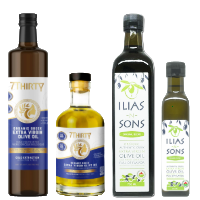

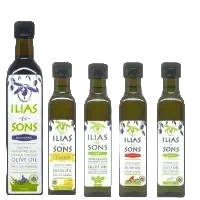

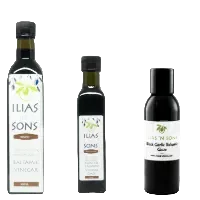

- Black Garlic Infused Extra Virgin Olive Oil - Low Fodmap
- Garlic Infused Extra Virgin Olive Oil
- Pizza Oil Cayenne Pepper Infused Extra Virgin Olive Oil
- Smoked Infused Extra Virgin Olive Oil
- Basil Infused Extra Virgin Olive Oil
- Rosemary Infused Extra Virgin Olive Oil
- Lemon Infused Extra Virgin Olive Oil
- Orange Infused Extra Virgin Olive Oil
- Black Truffle Extra Virgin Olive Oil
Greek Certified Gold: 7Thirty Polyphenols, Science & the EU Health Claim


At Ilias and Sons, we believe olive oil should bring together health, flavour and freshness—with clear information behind the words. Our 7Thirty high-phenolic organic Greek extra virgin olive oil and Gourmet Organic Original Blend reflect our family's connection to Greek olive-oil craftsmanship and our commitment to helping customers understand what they are buying.
This article began with analysis shared in 2023. We have updated it to distinguish that historical report from more recent harvests, explain the key phenolic compounds and set out the exact EU-authorised health claim. An old certificate remains useful history, but it is not a substitute for information about the bottle you buy today.
Health Unleashed: the 2023 product and our progress since
The product discussed in the original version of this article was from 2023. The Envirolabs certificate reproduced below, issued on 1 December 2023, reports 712 ppm total polyphenols, 10.6 ppm hydroxytyrosol and 5.3 ppm tyrosol for the sample tested. It also reports 13.0 mg of hydroxytyrosol, tyrosol and specified related products per 20 g of oil.
That last figure corrects the earlier article's reference to 15.5 mg. It is a combined measurement, not 13.0 mg of free hydroxytyrosol alone. The distinctions between total phenols, individual compounds and grouped derivatives matter when interpreting olive oil laboratory results.
Since that 2023 product, recent 7Thirty harvests have surpassed 900 mg/kg total polyphenols. This is a statement about those recent harvests, not a guarantee that every past or future batch has the same figure. Harvest conditions, the sample tested, analytical method and storage all belong in the discussion.
The displayed certificate labels its sample “KOKKINIA EXTRA VIRGIN OLIVE OIL.” It does not name both 7Thirty and Original Blend, so we do not assign every measurement in it to both products. For a specific bottle, request the corresponding harvest or batch report and confirm which oil the analysis represents.
The EU olive oil health claim: precise wording matters
Commission Regulation (EU) No 432/2012 includes the authorised statement: “Olive oil polyphenols contribute to the protection of blood lipids from oxidative stress.”
The regulation says the claim may be used only for olive oil containing at least 5 mg of hydroxytyrosol and its derivatives, such as the oleuropein complex and tyrosol, per 20 g of olive oil. It also requires consumers to be informed that the beneficial effect is obtained with a daily intake of 20 g of olive oil.
This is a specific food health claim, not approval of olive oil as a medicine. It does not authorise statements that a bottle treats cancer, prevents dementia or replaces prescribed treatment. “Medical-grade olive oil” is not the product category established by this regulation, which is why this updated article uses high-phenolic extra virgin olive oil instead.
A headline total-polyphenol figure alone is not the complete assessment. The required compounds, calculation and applicable conditions must be checked against the relevant analysis. We explain the rule here without certifying blanket eligibility for every product or harvest.
Read the authorised claim and its conditions in EU Regulation 432/2012.
Flavourful Excellence: understanding the key compounds
Hydroxytyrosol and tyrosol
Hydroxytyrosol and tyrosol are phenolic alcohols discussed in olive oil science and in the EU claim's measurement framework. A report can list these compounds separately as well as include specified related forms in a grouped result. That is why the individual hydroxytyrosol line should not be confused with the combined quantity per 20 g.
Oleocanthal
Oleocanthal is one of the olive-derived phenolics studied for biological activity, including mechanisms related to inflammation. It is also associated with the characteristic peppery throat sensation of some extra virgin olive oils. That sensory experience helps describe an oil; it does not quantify oleocanthal or establish a treatment effect.
Oleacein
Oleacein is another olive-oil phenolic investigated for antioxidant and inflammatory pathways. It belongs to the wider group of olive-derived secoiridoids. Research into these compounds helps explain why scientists look beyond a single total-polyphenol number to examine the chemical profile.
Oleuropein- and ligstroside-related compounds
Related secoiridoid forms are part of the broader phenolic matrix discussed in research. Their names can appear differently across analytical reports, including abbreviations defined in a certificate's footnotes. Read those definitions rather than treating all report totals and methods as interchangeable.
Pinoresinol and luteolin
The historical certificate also lists pinoresinol at 1.9 ppm and luteolin at 0.85 ppm. These are additional components of that sample's profile. Their presence is useful analytical information, but it does not establish a stand-alone health benefit at the serving level or guarantee the same amounts in another harvest.
Biological Brilliance: research without overstatement
Olive-derived phenolics are an active area of research. Scientific reviews discuss antioxidant and anti-inflammatory pathways and potential effects involving cellular signalling. But much of the mechanistic work uses isolated compounds, concentrated extracts, cell cultures or animal models—not an ordinary serving of a retail olive oil.
Those findings should not be translated directly into disease-treatment claims for 7Thirty or Original Blend. Human dietary evidence, experimental mechanisms and an authorised food health claim answer different questions. A responsible explanation identifies which kind of evidence supports each statement.
Fresh from Nature: Greek olive oil with a clear identity
7Thirty is our early-harvest, organic Koroneiki extra virgin olive oil from the Peloponnese, with a bold, peppery character. Original Blend brings together Athinolia and Koroneiki olives for a fruity, grassy profile and a milder peppery finish. They offer different tasting experiences within our Greek olive-oil tradition.
We have removed the older article's unsupported comparisons with international averages and a University of California, Davis study. A comparison needs a defined dataset, matching methods and the relevant samples before it can tell a shopper anything useful.
Enjoy these oils with vegetables, salads, bread or freshly prepared dressings. Choose by flavour and relevant product information, and care for them according to their label. A laboratory certificate complements that experience; it does not replace it.
Certified Laboratory Test Results: a historical reference
The image below preserves the Envirolabs report shared with this article in 2023. It is included as historical documentation for the labelled sample, not as a current certificate covering our entire range.

Bring health, flavour and freshness to your table
Discover 7Thirty high-phenolic organic Greek extra virgin olive oil and Gourmet Organic Original Blend. For more on our approach, explore our 7Thirty education page and Health Facts.
Our aim is not to make the biggest promise. It is to make the connection between Greek olive oil, thoughtful food choices and the evidence behind the product clearer—one harvest and one bottle at a time.
Leave a comment
Comments will be approved before showing up.