
Olive Oils & Balsamic
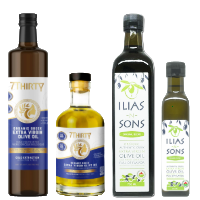

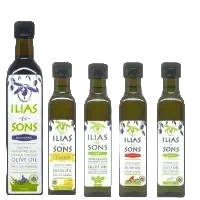

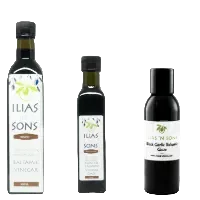

- Black Garlic Infused Extra Virgin Olive Oil - Low Fodmap
- Garlic Infused Extra Virgin Olive Oil
- Pizza Oil Cayenne Pepper Infused Extra Virgin Olive Oil
- Smoked Infused Extra Virgin Olive Oil
- Basil Infused Extra Virgin Olive Oil
- Rosemary Infused Extra Virgin Olive Oil
- Lemon Infused Extra Virgin Olive Oil
- Orange Infused Extra Virgin Olive Oil
- Black Truffle Extra Virgin Olive Oil
Pets and the use of Organic Greek Extra Virgin Olive Oil


Can extra virgin olive oil support pet health? It is a question close to our hearts at Ilias and Sons. Olive oil is part of our family's food tradition, and our dog, Ele, has benefited from regular use in our own experience. We want to share that story while being equally clear about what scientific research does—and does not—show.
Research into olive-derived compounds and canine health is encouraging. But studies of people, olive pulp or specially formulated supplements are not interchangeable with studies of bottled extra virgin olive oil in dogs and cats. Here is how to read the evidence and make an informed decision with your veterinarian.
Ele: our family's experience with regular olive oil use
Ele is our dog, and regular olive oil use has been a positive part of our experience caring for Ele. This personal connection is one reason we are interested in the relationship between olive oil, nutrition and pet wellbeing.
Our observations are a family experience, not a controlled trial. We are not claiming that olive oil cured an illness or that another dog will experience the same benefits. Ele's story belongs alongside the research, not in place of it.
High-phenolic EVOO: human research matters, but species matter too
High-phenolic extra virgin olive oil has a meaningful scientific foundation in human nutrition. A 2025 systematic review covering 17 clinical studies discussed cardiovascular findings and the European health-claim framework for olive polyphenols and protection of blood lipids against oxidative damage.
That is a specific research context, not a blanket promise that olive oil prevents every disease. It also does not establish a pet-health claim or a serving amount for dogs or cats. The formulation, population and measured outcome matter when interpreting any study.
Read the 2025 systematic review of extra virgin olive oil and human cardiovascular health.
What does the research show in dogs?
Olive pulp study: an encouraging oxidative-stress finding
A 2024 study recruited 30 dogs to investigate a diet supplemented with oil-free olive pulp flour. Dogs in the treatment group received 11.5 mg of the flour per kilogram of body weight daily, alongside their feed.
The treatment group's blood d-ROM measurement, a marker used to assess oxidative status, fell from 101.26 to 86.67 U CARR, with a reported p-value below 0.044. The control group did not show a significant change.
This is promising evidence for the particular olive-pulp preparation studied. It is not a trial of extra virgin olive oil, and that experimental amount is not an olive-oil serving recommendation. A change in a blood marker also does not demonstrate longer life or prevention of cancer.
Olive-oil-derived supplement: findings in obese dogs
A 2025 double-blind, randomized, placebo-controlled study involved 27 otherwise healthy dogs with obesity. Fourteen received an olive-oil-derived preparation enriched in N-acylethanolamines, and 13 received placebo, over three months.
Researchers reported improvements in several inflammatory, oxidative, liver and cardiac measurements. For example, IL-6 decreased relative to placebo with a reported p-value of 0.043, and biological antioxidant potential increased with a p-value of 0.032.
The important distinction is the product: this was a specially formulated olive-oil derivative, not ordinary bottled EVOO or 7Thirty. The trial was small and studied a particular group of dogs. It does not establish that adding our olive oil to food produces those same outcomes. A correction to the paper is also listed and should be consulted when reviewing the publication.
Read the randomized canine study. View its listed correction.
Why the less-positive findings belong in the discussion
A separate 2025 preliminary study examined 459 dogs. Oil supplementation was recorded in 14.16% of the dogs, and extra virgin olive oil was the most common oil among those supplemented.
Supplementation was more frequent in dogs with adverse food reactions, but no significant association was found between the type of oil and diagnosis. The authors said further studies were needed to establish causality. This does not prove that EVOO causes allergies; it does show why we should avoid presenting supplementation as automatically beneficial for every pet.
Read the preliminary study of vegetable oil supplementation and adverse food reactions.
What about cats?
The canine studies discussed here do not establish benefits for cats. Nor does human olive-oil research justify claims that EVOO prevents feline illness, extends life or treats hairballs. If you are considering olive oil for your cat, discuss the reason and the overall diet with your veterinarian rather than borrowing a dog-serving guideline.
A veterinarian-led approach to pet nutrition
The World Small Animal Veterinary Association's nutrition guidelines emphasize an individually tailored nutrition plan. Its resources include diet-history tools, body-condition scoring and calorie guidance for dogs and cats.
Before introducing olive oil, ask your veterinarian whether it fits your pet's existing diet, body condition and medical history. Any amount should be individualized, not based on a universal spoonful-per-body-weight rule. Extra oil changes the diet and adds calories; more is not automatically better.
This article does not recommend olive oil in the ears, essential-oil flea remedies or oil as a treatment for infection, constipation or other illness. Those concerns need veterinary assessment, not a home-treatment recipe.
Explore WSAVA's nutrition guidelines and pet-owner resources.
Choosing olive oil: quality without exaggerated pet-health promises
If your veterinarian agrees that olive oil has a place in your pet's diet, ask about the appropriate product and amount. When evaluating an EVOO, look for a clear producer, origin, harvest information and relevant batch testing rather than relying on words such as “healthy” or “premium.”
At Ilias and Sons, our family craftsmanship is rooted in Greece. 7Thirty is our high-phenolic organic Greek extra virgin olive oil, made from early-harvest Koroneiki olives. It is a food product, not a veterinary medicine, and the studies above did not test 7Thirty.
Our position is simple: share Ele's positive experience, take the emerging research seriously, and keep each claim connected to the evidence behind it. Caring for our pets deserves the same transparency and thoughtfulness we bring to choosing food for our families.
Leave a comment
Comments will be approved before showing up.