
Olive Oils & Balsamic
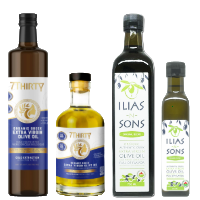

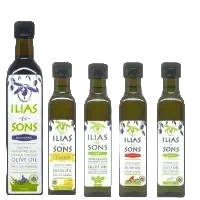


- Black Garlic Infused Extra Virgin Olive Oil - Low Fodmap
- Garlic Infused Extra Virgin Olive Oil
- Pizza Oil Cayenne Pepper Infused Extra Virgin Olive Oil
- Smoked Infused Extra Virgin Olive Oil
- Basil Infused Extra Virgin Olive Oil
- Rosemary Infused Extra Virgin Olive Oil
- Lemon Infused Extra Virgin Olive Oil
- Orange Infused Extra Virgin Olive Oil
- Black Truffle Extra Virgin Olive Oil
80 Years of Ilias: The Heart Behind Every Drop
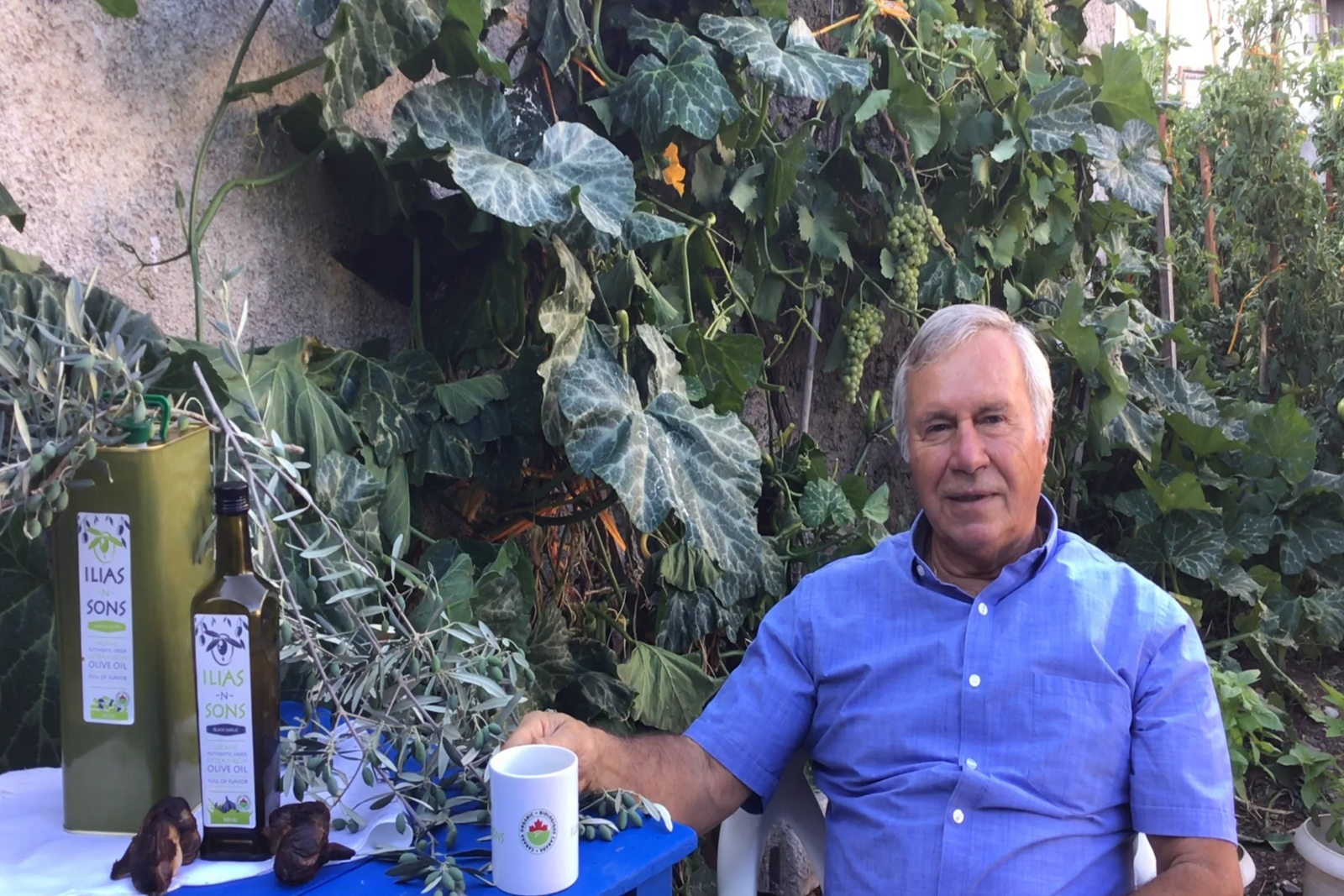

Celebrating our founder, Ilias Giannakos, on his 80th birthday
There are people who make a living, and then there are people who give their whole lives to a craft so completely that the work and the person become impossible to separate. Ilias aka. Louis Giannakos has always been that kind of man.
This year, we celebrate his 80th birthday with the kind of gratitude that is difficult to put neatly into words. Because to speak about Ilias is not only to speak about age, or work, or even achievement. It is to speak about continuity. About the same olive groves in Vasikali, Peloponnese, touched by the hands of fathers and sons across five generations. About a way of living that was never hurried, never careless, and never separated from the land that made it possible.
Long before there was a company name, long before bottles crossed borders, there were trees. There was the rhythm of the harvest. The judgment that comes only from standing in a grove year after year and learning how to read what cannot be written down: the look of the fruit, the feel of the air, the patience to wait, the discipline to move at the right moment and not a day too soon. Ilias learned those things the old way, by watching, by doing, by listening, and by understanding that the land does not respond well to force. It responds to care.
That is perhaps the simplest way to describe the legacy he built. Not a business first, but a standard. In our family, quality was never a slogan. It was a form of respect. Respect for the grove, for the fruit, for the work, and for the table where the oil would eventually be poured. Ilias passed that standard down in the plainest possible terms: do it properly, or do not do it at all.
It meant no shortcuts when shortcuts were available. It meant no blending away character for the sake of convenience. It meant accepting that volume matters less than timing, and timing matters less than integrity. It meant understanding that every decision leaves a mark, whether anyone sees it or not. The oil always tells the truth in the end.
That belief lives in the details. Olives pressed while fresh, not after waiting. Extraction done gently, not aggressively. Attention paid not only to what is produced, but to what is preserved. Ilias taught us that freshness is not a single date printed on a label. It is the sum of a hundred decisions, each one small on its own, each one changing the final result. The right harvest. The right press. The right protection from heat, light, and time. Nothing accidental. Nothing careless.
And then there is the part of his legacy that cannot be measured so easily, even if science eventually found language for it. Long before polyphenols entered everyday conversation, Ilias already knew what good olive oil meant in a life. He did not arrive at that knowledge through trends. He saw it at the family table. He saw it in the endurance of older generations, in the steadiness of daily habits, in the Mediterranean belief that food is not separate from health, and health is not separate from how one lives. Later, what the family had always understood in practice found a benchmark in 7Thirty, named for the high-phenolic standard that would come to symbolize a level of excellence Ilias had been pursuing long before the terminology became fashionable.
But even that is only part of the story. To reduce Ilias to discipline alone would miss something essential about him. His legacy is not merely precision. It is generosity. The kind that takes shape in kitchens, in meals that stretch longer than expected, in bread passed across a table, in someone insisting you take another spoonful, another piece, another seat. When the family's olive oil began making its way beyond Greece, what travelled with it was not just taste. It was hospitality. The old understanding that food is one of the most ordinary and powerful ways people care for one another.
That is why flavour matters so much in this story. Not because tasting notes are fashionable, but because flavour is memory's most faithful messenger. The peppery finish. The grassy brightness. The golden richness that settles across warm bread, tomatoes, lentils, fish, or greens and somehow makes each one more itself. For Ilias, olive oil was never meant to sit passively beside a meal. It belonged at the center of it, carrying freshness, depth, and life into food that otherwise remained unfinished.
The same instinct shaped the family's infused oils too. They are best understood not as departures from tradition, but as extensions of it: black garlic for depth, lemon for lift, basil for brightness, smoke for warmth and memory. They belong to the same philosophy Ilias carried from grove to kitchen — that good ingredients are not there to impress, but to nourish, gather, and make everyday meals feel complete.
At 80, Ilias remains what he has always been: the heart behind every drop, the keeper of standards, the one who understood that the best things cannot be rushed and should never be faked. His legacy is not only in the groves, or in the method, or in the taste. It is in the family itself. In children and grandchildren who inherited more than land or work. They inherited his stubbornness in the best sense of the word. His reverence for quality. His insistence that what feeds people should be made honestly. His belief that something worth passing down must first be made worthy of passing down.
Eighty years is a long life. But some lives do more than pass through time. They shape the people around them. They steady a family. They teach by repetition, by example, by standards quietly upheld over decades. That is the kind of life Ilias has lived.
And so today, more than anything, we celebrate the man himself: our founder, our father, our grandfather, our teacher. The one who showed us that craft is a form of character, that health begins with how we live each day, and that family legacy is built not in grand gestures, but in thousands of careful ones.
Happy 80th, Ilias.
What you planted, protected, and passed down continues to nourish more than a table. It nourishes all of us.
Leave a comment
Comments will be approved before showing up.