
Olive Oils & Balsamic
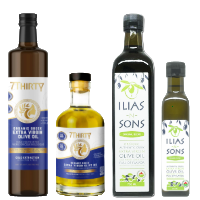

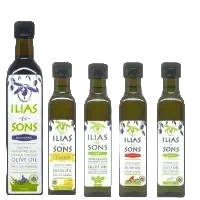

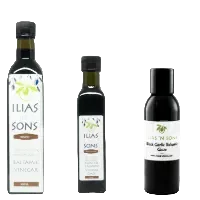

- Black Garlic Infused Extra Virgin Olive Oil - Low Fodmap
- Garlic Infused Extra Virgin Olive Oil
- Pizza Oil Cayenne Pepper Infused Extra Virgin Olive Oil
- Smoked Infused Extra Virgin Olive Oil
- Basil Infused Extra Virgin Olive Oil
- Rosemary Infused Extra Virgin Olive Oil
- Lemon Infused Extra Virgin Olive Oil
- Orange Infused Extra Virgin Olive Oil
- Black Truffle Extra Virgin Olive Oil
Polyphenols, Testing, and Trust


The Importance of Testing Methods for Olive Oil
Polyphenols are the key components that give exceptional extra virgin olive oil its bold flavor, a slight burn at the back of the throat, and the health benefits associated with the Mediterranean diet for centuries. However, they are often misunderstood and misrepresented in the olive oil industry.
Many brands promote high polyphenol numbers, but fewer explain how those numbers were obtained or whether they accurately represent the oil sold to consumers.
At Ilias and Sons, this distinction has always been significant.
Since 2010, we have exclusively utilized the International Olive Council (IOC) HPLC method for measuring polyphenols. This method is the same one used by regulators, reference laboratories, and the European Union for health claims. This standard applies to all our oils, particularly our flagship high-phenolic oil, 7Thirty High Phenolic Greek Olive Oil.
The Significance of Polyphenols
Polyphenols are natural antioxidant compounds found in extra virgin olive oil. Important compounds such as oleocanthal, oleacein, hydroxytyrosol, and tyrosol are linked to anti-inflammatory, cardioprotective, and neuroprotective benefits.
The European Union formally acknowledges these benefits under EU Regulation 432/2012, which permits a health claim when an olive oil contains at least 5 mg of hydroxytyrosol and related compounds per 20 g of oil. This threshold is approximately equivalent to 250 mg/kg of polyphenols, assuming proper analytical testing.
Most supermarket olive oils fall significantly below this level. Many are filtered, late-harvested, blended, or aged beyond their optimal point.
In contrast, 7Thirty consistently surpasses this threshold, providing verified high-phenolic content supported by certified laboratory analysis.
Measuring Polyphenols: The Importance of Methodology
Not all polyphenol tests yield the same results. The testing method determines whether a number represents regulatory-grade science or marketing terminology.
Comparison of Polyphenol Testing Methods
| Testing Method | How It Works | What It Measures | Accuracy | Regulatory Acceptance | Best Use Case |
|---|---|---|---|---|---|
| IOC HPLC (COI/T.20/Doc.29/Rev.2) | Chromatographic separation | Individual phenols (hydroxytyrosol, tyrosol, oleocanthal, oleacein, lignans, flavonoids) | Very high | Yes – IOC, EU, EFET | Official testing, health claims, consumer transparency |
| Quantitative NMR (Magiatis Method) | Nuclear magnetic resonance | Specific secoiridoids (oleocanthal, oleacein, aglycones) | High (targeted) | Limited (research-based) | Academic research, advanced phenol profiling |
| Spectrophotometric Total Phenols | Light absorbance estimation | Non-specific reducing compounds | Moderate | No | Screening, internal checks |
| Rapid / Proxy Methods | Predictive or indirect models | Estimated antioxidant activity | Low | No | Marketing or preliminary estimates |
The Gold Standard: IOC HPLC Method
The IOC HPLC method is distinguished by its ability to:
- Separate and quantify individual phenolic compounds
- Produce repeatable, comparable results across different countries and laboratories
- Be the only method accepted for EU health claims
- Withstand regulatory, retail, and scientific scrutiny
This is why we adopted it and have consistently adhered to it.
Every harvest of 7Thirty is tested using this method, ensuring that the polyphenol levels we report accurately reflect the actual oil bottled and sold, rather than estimates or projections.
You can view an example of our certified testing in our blog
Greek Certified Gold: Unlock the Health Wonders of Medical-Grade Olive Oil.
Understanding NMR Testing in Context
Some premium olive oils provide certificates based on quantitative NMR testing, particularly methods developed at the National and Kapodistrian University of Athens.
These methods are:
- Scientifically advanced
- Effective for targeted measurement of compounds like oleocanthal and oleacein
- Highly regarded in academic research
However, it is essential to recognize that:
- NMR is not an IOC reference method
- Results are not directly comparable to IOC HPLC totals
- It is not the regulatory standard for consumer labeling or EU health claims
In summary, NMR serves as a powerful research tool, while IOC HPLC remains the global reference standard.
An Emerging Industry Concern: Early Testing vs. Actual Harvest
As consumer awareness increases, a concerning practice has surfaced.
Some producers:
- Test very early olive samples, when polyphenol levels are naturally highest
- Publish those results
- Harvest weeks later, when polyphenol levels may have decreased
The oil sold may not align with the published test results.
At Ilias and Sons:
- We harvest early
- We press immediately
- We test the finished oil
- We publish results that accurately reflect what is in the bottle
This is particularly crucial for 7 Thirty, where precision and trust are paramount.
Taste, Reviews, and Real-World Evidence
High-phenolic olive oil is characterized by its bold, peppery flavor.
As one customer noted:
“Tastes like the olive oil we had in Greece. Fresh, peppery, and you can tell it’s the real deal.”
Another remarked:
“The quality difference between this and store-bought is night and day.”
That peppery sensation is not a flaw; it is a result of oleocanthal, one of the most studied polyphenols in olive oil, and serves as a clear sensory indicator of high phenolic content.
A Family Legacy of Longevity
For us, olive oil represents more than a trend; it is a part of our heritage.
My mother lived to 112 years old, and many generations of our family have lived well past 100. Olive oil was not merely a supplement; it was a daily ritual. One tablespoon each morning, drizzled generously on vegetables, never refined or diluted.
This tradition continues in our oils today and is reflected in our broader philosophy outlined in
The Superfood of Superfoods.
The Importance for You
Polyphenol numbers hold significance only when:
- The testing method is disclosed
- The method is recognized and repeatable
- The test corresponds to the actual harvest and bottling
This is why we consistently rely on IOC HPLC testing, year after year.
It is more challenging and stringent, which is why our results are not only high but also genuine.
If you wish to experience the taste of verified high-phenolic olive oil, explore 7 Thirty High Phenolic Greek Olive Oil and discover the difference that transparency, tradition, and rigorous testing can make.
Leave a comment
Comments will be approved before showing up.