
Olive Oils & Balsamic


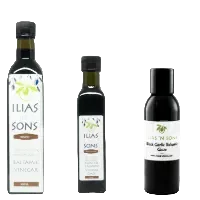

- Black Garlic Infused Extra Virgin Olive Oil - Low Fodmap
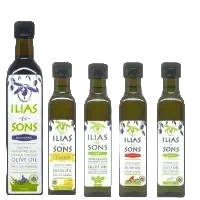
- Garlic Infused Extra Virgin Olive Oil
- Pizza Oil Cayenne Pepper Infused Extra Virgin Olive Oil
- Smoked Infused Extra Virgin Olive Oil
- Basil Infused Extra Virgin Olive Oil
- Rosemary Infused Extra Virgin Olive Oil
- Lemon Infused Extra Virgin Olive Oil
- Orange Infused Extra Virgin Olive Oil
- Black Truffle Extra Virgin Olive Oil
Real vs Fake Olive Oil: A Guide to Choosing Authentic Greek EVOO


How can you tell real extra virgin olive oil from a misleading label? Start with traceability, clear product information and a producer who welcomes questions. Price, bottle colour and a persuasive story cannot establish authenticity on their own.
At Ilias and Sons, we want shoppers to understand Greek extra virgin olive oil before choosing a bottle. This guide explains what to look for, what common shortcuts cannot prove and where to learn more about the oils on your table.
Real vs fake olive oil: separate the questions
Adulteration, incorrect grading and poor freshness are different issues. An oil mixed with another type of oil is not the same problem as an olive oil labelled extra virgin despite failing the relevant quality criteria. An authentic oil can also be poorly stored after production.
Do not assume fraud from one disappointing flavour or from a country of origin. Likewise, do not treat a claim on the front label as complete verification. A careful buying decision asks what the seller can document.
A blend can be authentic extra virgin olive oil
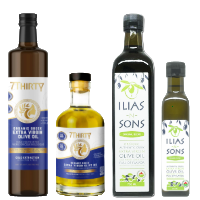
Blending olive varieties does not automatically disqualify an oil from being EVOO. Our Gourmet Greek Organic Extra Virgin Olive Oil, Original Blend combines Athinolia and Koroneiki olives. The important questions concern the oil's grade, composition and traceability, not whether it comes from a single variety.
For a different expression, 7Thirty high-phenolic organic Greek extra virgin olive oil is made from Koroneiki olives. A single-variety oil and a variety blend can offer distinct flavours without making one inherently genuine and the other fake.
Read the label, then ask about the origin
If you want extra virgin olive oil, choose a product identified as extra virgin olive oil. Terms such as “pure olive oil” are not interchangeable with EVOO. But the words “extra virgin” are the beginning of your enquiry, not its conclusion.
Look for a named producer, olive origin and useful batch information. Distinguish where olives were grown from where an oil was bottled. Greece, Italy or any other producing country can be part of a clear origin story, but a national flag alone is not proof of the oil's grade.
Our family connection to Greece spans five generations of olive-oil craftsmanship. Learn about that connection through our tribute to Yia Yia Maria Giannakos and our Greek food traditions. Heritage adds meaning; product documentation answers a different question.
Check harvest information and freshness
Ask which harvest the oil represents and look for relevant best-before and batch details. A best-before date and a harvest reference provide different kinds of information, so do not assume one tells you everything about the other.
Avoid universal shelf-life promises that ignore packaging, handling and storage. Choose a quantity that suits your household's use and follow the product's label. When dates or origin are unclear, ask the seller rather than immediately concluding that the oil is counterfeit.
Understand olive oil testing and polyphenols
Authenticity, extra virgin grading and phenolic content are related subjects, but they are not the same assessment. A large total-polyphenol number does not by itself prove every quality claim on a bottle.
For high-phenolic olive oil, ask which sample was tested, which method was used and whether the report corresponds to the relevant harvest or batch. Units and individual-compound measurements matter too.
Our guide to olive oil polyphenols and key compounds introduces the terminology. For a dated example, see our 2023 laboratory analysis and updated EU health-claim discussion. An old report is historical evidence for its labelled sample, not a current certificate for every oil in the range.
Dark vs clear bottles: packaging is not authentication
A dark bottle or tin can provide useful light screening, but it cannot prove that the contents are authentic EVOO. A clear bottle does not automatically mean the oil is fake. Choose appropriate packaging and care for the oil after purchase.
We began with dark bottles for Organic Original Blend, then introduced clear bottles to showcase 7Thirty's green appearance. Today, 7Thirty offers both dark UV-protective and clear bottle options. Either presentation deserves thoughtful storage away from light and heat.
Read our guide to dark vs clear olive oil bottles and EVOO storage for the full story and practical cupboard advice.
What tasting can—and cannot—tell you
Tasting helps you discover whether an oil suits your palate. Product descriptions may mention fruity, grassy, bitter or peppery characteristics. Our Original Blend offers a milder peppery balance, while 7Thirty has a bolder, robust character.
These descriptions help you choose food you enjoy, but a home tasting is not laboratory analysis or a formal grading assessment. Nor does every authentic oil need to taste equally intense. If an oil seems unpleasant or differs sharply from its description, contact the seller and share the batch information.
Use price and awards as context, not guarantees
Price can reflect production, packaging and distribution, but it is not an authenticity test. Neither an inexpensive bottle nor an expensive one should be judged on price alone.
7Thirty received NYIOOC Silver Awards in 2021 and 2022. Those achievements are part of its history; they should be attached to the relevant years rather than presented as proof that every later harvest is identical. Awards complement information about origin, testing and handling—they do not replace it.
Choose Greek EVOO for your kitchen, not just its claims
For everyday versatility, Original Blend combines Athinolia and Koroneiki with fruity, grassy notes. For a bold finishing oil, 7Thirty offers early-harvest organic Koroneiki character. Consider the dish, your flavour preference and the product information when deciding.
Our 7Thirty education page provides more product context. If health benefits are part of your interest, visit Health Facts and distinguish a specific supported health claim from broad promises about disease prevention.
The most useful buying question is not “Does this bottle look authentic?” It is “Can I understand where this oil comes from, what it is and how to care for it?” Good Greek extra virgin olive oil should bring both flavour to your table and clarity to your decision.
Leave a comment
Comments will be approved before showing up.