
Olive Oils & Balsamic
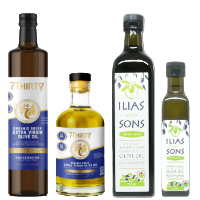

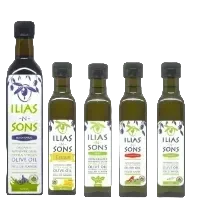

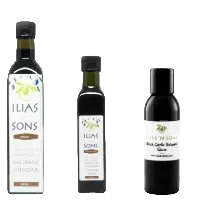

- Black Garlic Infused Extra Virgin Olive Oil - Low Fodmap
- Garlic Infused Extra Virgin Olive Oil
- Pizza Oil Cayenne Pepper Infused Extra Virgin Olive Oil
- Smoked Infused Extra Virgin Olive Oil
- Basil Infused Extra Virgin Olive Oil
- Rosemary Infused Extra Virgin Olive Oil
- Lemon Infused Extra Virgin Olive Oil
- Orange Infused Extra Virgin Olive Oil
- Black Truffle Extra Virgin Olive Oil
Greek Extra Virgin Olive Oil: 10 Benefits & Health Facts


Extra virgin olive oil has a remarkable place in Greek food culture. Its history reaches back through Mediterranean agriculture, trade and family traditions. Today, its appeal brings together flavour, nutritional composition and a growing body of research.
At Ilias and Sons, Greek EVOO is part of our everyday table. Here are ten benefits and health facts worth understanding, with a clear distinction between established composition, findings from studies and the practical reasons we enjoy it.
1. A source of monounsaturated fats
Olive oil is rich in monounsaturated fat, particularly oleic acid. That is one reason it belongs in discussions of dietary fat quality. It is more useful to consider the overall balance of foods than to label every fat simply “good” or “evil.”
EVOO is still a fat-rich, energy-dense food. Its nutritional role depends on how it fits into your meals, not on treating it as something that can be consumed without limits.
2. Phenolic compounds worth knowing
Extra virgin olive oil contains phenolic compounds, with profiles that vary according to the olives, harvest, processing and storage. Hydroxytyrosol, tyrosol, oleocanthal and oleacein are among the names you may encounter.
These compounds make EVOO an interesting subject of research, but a high total-phenolic number is not a promise of protection from illness. Read our introduction to olive oil polyphenols to understand the terminology.
3. A specific authorised claim about oxidative stress
The EU-authorised wording is precise: “Olive oil polyphenols contribute to the protection of blood lipids from oxidative stress.” It is narrower than a general claim that antioxidants prevent cancer or stop ageing.
The claim applies to oils containing at least 5 mg of hydroxytyrosol and its derivatives, such as the oleuropein complex and tyrosol, per 20 g of oil. Consumers must be informed that the beneficial effect is obtained with a daily intake of 20 g. Total polyphenols alone do not establish eligibility.
Read the authorised claim and conditions. Our laboratory-analysis and health-claim guide explains why sample identity and measurement context matter.
4. Cardiovascular evidence within a Mediterranean diet
The revised PREDIMED study involved 7,447 adults in Spain who had high cardiovascular risk but no cardiovascular disease at enrolment. It found fewer major cardiovascular events in Mediterranean-diet groups supplemented with EVOO or nuts than in the comparison group advised to reduce dietary fat.
This is important evidence for those dietary interventions. It does not mean a daily spoonful guarantees prevention of heart attack or stroke, and the study did not test Ilias and Sons products.
Read the revised 2018 PREDIMED report.
5. Continuing research into cardiometabolic markers
A 2025 systematic review brought together 17 clinical studies examining virgin olive oil, including EVOO, and cardiovascular outcomes or related biomarkers. It reported favourable findings while calling for further clinical studies to clarify the effects.
A biomarker is not the same as a guaranteed clinical outcome. This research gives us reasons to keep learning, rather than a basis for advertising olive oil as a medicine.
Explore the systematic review of EVOO and cardiovascular health.
6. A natural fit for Mediterranean-style meals
Olive oil belongs alongside vegetables, legumes, grains, fruit, nuts and other foods in Mediterranean eating patterns. Its role is part of the plate, not a substitute for variety.
Our Mediterranean diet research and meal guide offers practical ways to build meals around the wider pattern. Individual needs and dietary restrictions still deserve attention.
7. Enjoyment without a weight-loss promise
Olive oil can be part of a satisfying meal, but it does not bypass energy balance or make weight gain impossible. The original article's suggestion that its fats provide energy without contributing to weight gain was misleading.
Use amounts appropriate to your needs and enjoy EVOO for its flavour. Neither drinking it nor taking it first thing in the morning is required to make it part of your diet.
8. Flavour that brings simple food to life
A good olive oil adds character to a salad, vegetables, bread or a finished dish. Fruity, grassy and peppery notes can make familiar ingredients more enjoyable without complicated preparation.
Our Gourmet Greek Organic Extra Virgin Olive Oil, Original Blend combines Athinolia and Koroneiki olives. Its fruity, grassy character and milder peppery finish make it a versatile choice for everyday cooking and dressings.
9. A chance to choose quality more thoughtfully
Looking at origin, flavour, harvest information and relevant analysis makes choosing oil more meaningful than following a generic “superfood” label. Storage and the information specific to a bottle also matter.
7Thirty high-phenolic organic Greek extra virgin olive oil offers bold, peppery early-harvest Koroneiki character from the Peloponnese. Learn more on our 7Thirty education page, and explore our guide to authentic EVOO.
10. A connection to family and tradition
For our family, extra virgin olive oil represents shared meals, work in Greece and knowledge passed between generations. Maria Giannakos lived to 112, and her life remains a precious part of that history.
Her longevity is not scientific proof that olive oil explains a long life. Her story matters because of the family, generosity and traditions she shared. Read our tribute to Maria for that personal perspective.
What this list does not promise
EVOO should not be presented as a proven treatment or guaranteed prevention for cancer, Alzheimer's disease, osteoporosis or other illnesses. Findings about compounds in a laboratory do not automatically establish what happens when people eat a particular product.
Dietary benefits also do not establish topical benefits. Our olive oil hair and skin guide explains the separate considerations for beauty uses.
Bring Greek EVOO to your everyday table
Choose 7Thirty when you want bold, peppery flavour, or Organic Original Blend for a milder, versatile profile.
Enjoy the oil as part of varied meals, read the relevant product information and keep the bigger dietary picture in view. Explore Health Facts for more context. Greek EVOO offers enough to appreciate without a promise that one ingredient does everything.
Leave a comment
Comments will be approved before showing up.